What customers say
Glass Of The Sun SolarSolar design and installation · Los Angeles, CA
Serving Los Angeles and nearby towns
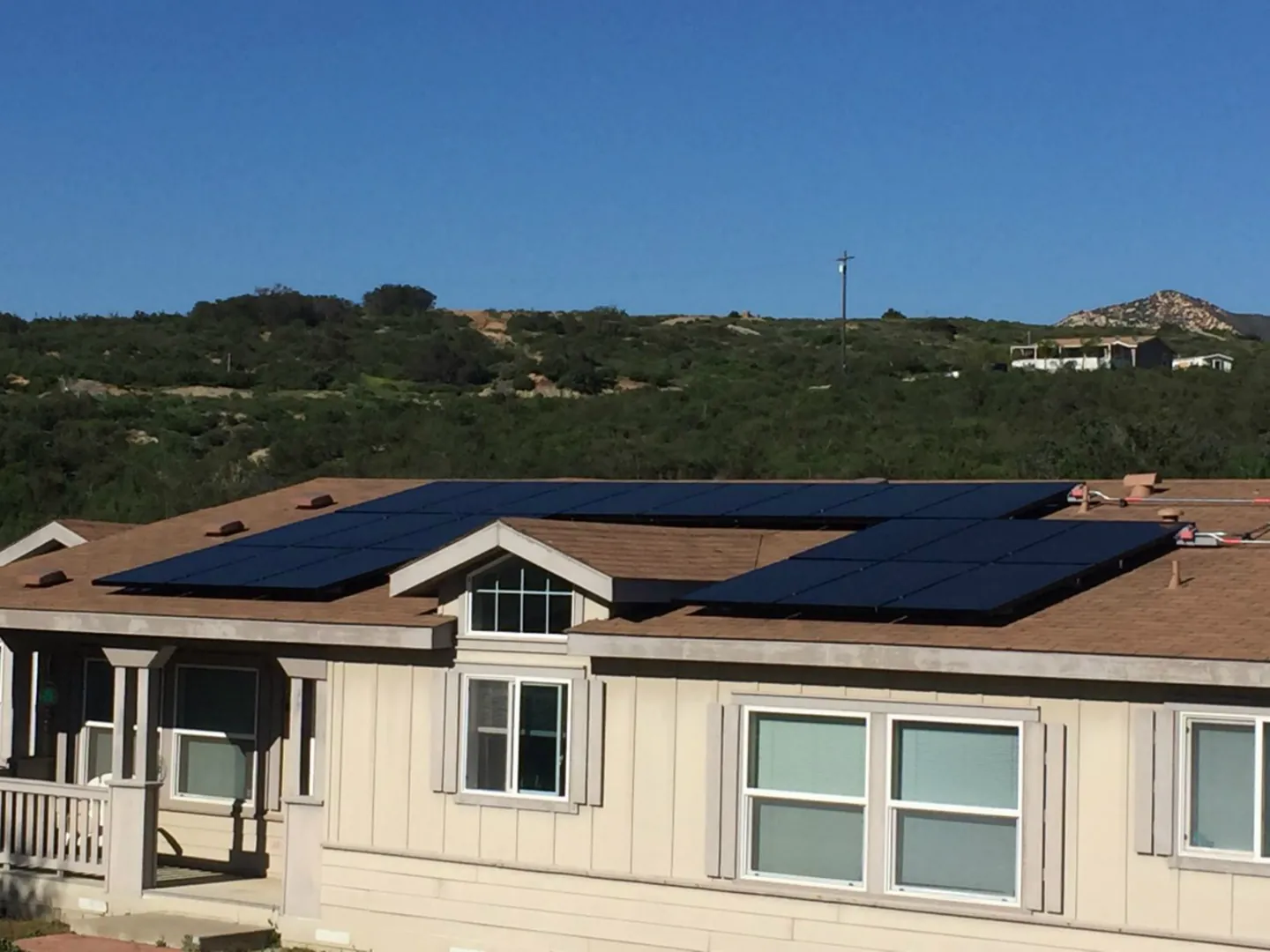
Private website concept.
Los Angeles, California
Glass of the Sun Solar is a solar installation service for Los Angeles homes with small, flat or crowded roofs and backyard ADUs. You'd get a surface map, a meter plan and a quote priced per surface, because fire pathways and LADWP's meter rule decide what your lot holds and which bill it lowers.
Los Angeles, California
Glass Of The Sun Solar works the dense parts of Los Angeles, where the roof is small, the fire pathways are fixed and the meter often sits in a carport. We map the surfaces you actually have and price each one, because a 1930s bungalow is not a suburban ranch.
What customers say
Serving Los Angeles and nearby towns
What we do
Call or visit
| Phone | (951) 503-6077Call to book an assessment. |
|---|---|
| Office | 925 S Mansfield Ave, Los Angeles, CA 90036Parking on site. |
| Estimates | Free, in writingDesign and price as separate documents. |
Why homeowners pick us
Our story
Installing across Los Angeles, West Hollywood, Culver City and the San Fernando Valley.
Where we work
Enter each roof on your lot. The planner clears the fire-access strips, fits example panels into what is left, and shows which meter the power would land on. It runs on this device; nothing is sent.
House meter
ADU meter
Illustrative calculation, not a design. Panels are an example 440 W module, 5.65 × 3.72 ft. Pitched roofs follow the LAFD placement rules for one- and two-family homes in the City of Los Angeles: one 3-ft pathway per hip slope, two per single-ridge (gable) slope, panels 3 ft below the ridge. Other cities' fire departments set their own; ask which rule a designer used. Flat roofs assume a 3-ft clear edge and low-tilt rows with a 2-ft gap, to be confirmed. Yearly output uses 1,704 kWh per kW (EcoGen v1-2026 data, Los Angeles reference point) before shade and system losses, so real output is lower.
Before you accept a panel count, ask two things about every roof on your lot: how much area is left after the fire-access pathways, and which meter that surface would feed. A quote that cannot answer both is guessing at its size.
Several Los Angeles directory pages, read in November 2026, give one "average" system size without asking whether your roof can hold it, and some still subtract a federal credit that ended with 2025. On a small lot, the roof sets the size.
A fire-access pathway is a panel-free strip that lets firefighters walk from the roof edge to the top. A ridge setback is the panel-free band just below the ridge. For one- and two-family homes in the City of Los Angeles, the LAFD's solar placement requirements set both:
| Roof type | Pathways per slope with panels | Ridge setback | Width lost per slope |
|---|---|---|---|
| Hip roof | One, 3 ft wide | Panels at least 3 ft below the ridge (2 ft with an approved method) | 3 ft |
| Single-ridge (gable) roof | Two, 3 ft wide | Same | 6 ft |
The eave overhang does not count toward pathway width, so a designer cannot hang the walkway over the gutter. And the LAFD's Construction Services Unit must approve every solar installation on a building before work starts.
Take a single-ridge slope 30 feet wide and 13 feet from eave to ridge (Illustrative example). Two pathways leave 24 feet of width; the ridge rule leaves 10 feet of depth. A slope that looked like 390 square feet now offers 240, a loss of more than a third before a single vent or skylight is counted.
Flat roofs are less clear. The LAFD page gives no flat-roof rule for one- and two-family homes, so ask which clearance the designer assumed and who confirmed it. The page also cites the 2006 International Fire Code; ask the designer to confirm it still reflects what the LAFD enforces.
How we work. Glass of the Sun Solar would price each usable surface on your lot as its own line and let you choose which ones to build:
An ADU (accessory dwelling unit) is a second, smaller home on the same lot, such as a backyard unit. Before anyone draws panels on one, ask which meter the array will feed and whose bill it will lower. In LADWP territory, that decides what the panels are worth to you.
Net metering is LADWP's billing method for home solar. When your panels send more power to the grid than you draw over a billing period, the excess becomes a bill credit, priced at the energy rate of your own rate schedule, that rolls forward to later bills. The catch sits in one sentence of the LADWP net metering rider: "Credit balances will only be applied to the bill associated with the meter that measured the Excess Energy." A balance left when that customer ends service is set to zero.
So an array wired to a separately metered ADU can lower only the ADU's bill, however large the house bill is.
Three rules shape the plan:
| Situation | Rule |
|---|---|
| New detached ADU | The 2025 Energy Code requires newly installed solar unless an exception applies; existing panels do not count. The new panels may join the main house system on the same lot, and need not sit on the ADU, if they are part of the ADU's permit application and the utility allows the expansion (CEC Energy Code ADU FAQ) |
| Attached ADU, or a conversion of unconditioned space (such as a garage that was never heated or cooled) | Treated as an addition; no solar required |
| Any lot | LADWP sizes a system by adding all existing and new solar on the premises (LADWP interconnection charges) |
The code does not say whether an ADU's required panels must serve the ADU meter or the house meter. That open point is what a meter plan settles.
The premises total matters for speed. LADWP's fast-track process can cover projects under 10 kW AC with no battery and no service upgrade, and LADWP adds house and ADU arrays together when it sizes the system. DC kW is the panels' rated output added up; AC kW is what the inverters deliver, which is usually a little lower.
If a tenant will hold the ADU's electric account, ask LADWP how credits on that meter are handled when the account holder changes. The rider's rule that zeroes a balance when service ends is the reason to ask before the wiring is fixed.
How we work. The assessment would settle what each surface can hold, which meter it feeds, and which permit and utility path applies. Plan on about 2 hours on site (Illustrative example).
What would be checked:
What to prepare:
What you'd get in writing:
Illustrative example. Every figure is an example, not a price or estimate for a real home.
The lot: a single-story house with a single-ridge roof whose south slope is 30 ft wide and 13 ft from eave to ridge. In the backyard, a new detached ADU with a 20 × 24 ft flat roof and its own LADWP meter. Panels are 440 W, about 5.65 × 3.72 ft. Yearly use: house 11,000 kWh, ADU 2,500 kWh.
Main roof: 24 × 10 ft after pathways and ridge setback. Two landscape rows of four: 8 panels, 3.52 kW DC.
ADU roof: a 3-ft clear perimeter (Assumption: LAFD or LADBS to confirm for a one- or two-family flat roof) leaves 14 × 18 ft. Two low-tilt rows of three, spaced so they do not shade each other: 6 panels, 2.64 kW DC.
Total: 14 panels, 6.16 kW DC, under LADWP's 10 kW AC fast-track line as long as there is no battery and the panel work stays short of a service upgrade.
| Illustrative calculation | Main roof | ADU flat roof | Lot total |
|---|---|---|---|
| Panels | 8 | 6 | 14 |
| Size (DC) | 3.52 kW | 2.64 kW | 6.16 kW |
| Yearly production before losses | about 6,000 kWh | about 4,500 kWh | about 10,500 kWh |
Production uses 1,704 kWh per kW per year (EcoGen v1-2026 data, Los Angeles reference point), before shade and low-tilt losses, so real output would be lower.
The meter decision (Illustrative calculation). Wire each array to its own building and the house meter gets about 6,000 kWh against 11,000 kWh of use. The ADU meter gets about 4,500 kWh against 2,500, and the surplus credit stays on the ADU bill, where the house cannot use it.
Wire both arrays to the house meter and the house gets about 10,500 kWh against 11,000. For a new detached ADU, that depends on two Energy Code conditions: the panels are in the ADU's permit application, and LADWP allows the expansion. The meter plan would raise both before the permit is filed.
Neither split wins by default. If the ADU used more power, the first split could suit you. If it uses little or is rented on its own account, the second keeps more value with the house. The bills per meter decide.
Before comparing a quote with any benchmark, take out every non-solar line. The example lot's quote:
| Line (Illustrative example) | Amount |
|---|---|
| Main-roof solar | $10,900 |
| ADU-roof solar | $8,300 |
| Flat-roof tilt racking premium | $900 |
| Conduit and trench from the ADU | $1,600 |
| Structural letter for the ADU roof | $650 |
| Main-panel work | $1,200 |
| Total | $23,550 |
Check it in four steps (Illustrative calculation):
Treat that gap as a question for the bidder. The benchmark is a modeled state price, not a quote for your home, and two small roofs carry costs one large array does not: two racking sets, two layouts, a longer wiring run. Ask what the split adds. EcoGen does not say whether its $/W is based on DC or AC watts, so divide by DC watts and say so when you compare bids.
The benchmark also scales in a straight line: EcoGen puts a 4 kW system at about $11,400 (State benchmark), the same $2.85 per watt. Real small systems still carry fixed costs, such as LADWP's $130 interconnection charge per project, spread over fewer watts. Hold a small-house quote in Inglewood or Los Angeles against the per-watt figure, then ask the bidder to name the fixed costs.
The lines that can move a small-lot quote, and what to ask about each:
| Cost driver | Why it appears on a small LA lot | What to ask |
|---|---|---|
| Flat-roof racking | Tilted or ballasted racking on an ADU or flat main roof | Which racking, and is the premium a separate line? |
| Structural letter | ADU roofs, carports and patio covers may need proof they carry the load | Who signs it, and is it in the price? |
| Conduit or trench | A detached garage or ADU sits away from the main panel | How many feet, and which route? |
| Main-panel work | The house panel may need work to accept solar | What exactly changes, and does it trigger a service upgrade? |
| Battery | EcoGen prices batteries separately from solar | Is it its own line, and how does it change the permit lane? |
| Re-roof | Solar at re-roof time can often save money (DOE) | Is roofing quoted separately, by whom? |
In the City of Los Angeles, the city inspection does not switch your system on; LADWP does. Ask every installer for this sequence in writing, with who files each step:
A battery changes the path. It takes the project out of LADWP's fast track and, in the permit data the city reports to the state, usually out of the online lane too. California Energy Commission permit data show the City of Los Angeles issued 11,600 residential solar permits in 2024, 61% online. Solar-only projects went online 66% of the time; solar plus storage, 12% (136 of 1,137). With a battery line, plan the timeline around a plan check.
Two arrays on two meters need two production records. Before you sign, ask for:
Bring this list to every quote, and use the quote checklist on this site to keep the answers together. License and contract items follow the CSLB's Solar Smart guide.
The contractor
The contract
The Los Angeles details
Red flags
The CSLB suggests at least three bids. Ask each for the same per-surface breakdown, so the numbers line up.
Does anyone still pay toward a solar installation in Los Angeles? Not the way older quotes assume. The IRS says the residential clean energy credit is not available for property placed in service after December 31, 2025, so a system you own and finish in 2026 gets no federal credit. LADWP's net metering guidelines also list its Solar Incentive Program as discontinued.
What about the property-tax exclusion? As of November 2026, California's property-tax exclusion for newly installed solar is scheduled to end on January 1, 2027. Don't count on it for a system finished later unless the law changes.
What is LADWP's Solar Rooftops program? LADWP installs and owns a 1 to 10 kW system on an owner-occupied home, pays $360 to $900 a year for up to 20 years and receives all the energy. You are renting out your roof, so it does not lower your bill.
Does this apply outside the City of Los Angeles? The surface questions travel; the utility rules change by address. The city is LADWP territory. Neighbors differ: Culver City is split between LADWP and SCE by address, and West Hollywood is on SCE with Clean Power Alliance. SCE addresses that applied for interconnection since April 2023 fall under the state's Net Billing Tariff, which values exported power at hourly avoided-cost rates that are usually lower than import rates. Check the utility on your bill before trusting any savings model.
Which areas would you cover? We start in Los Angeles. Coverage of West Hollywood, Beverly Hills, Culver City and Inglewood covers these towns.
Do I need a battery? Not for net metering. It stays an optional line, and LADWP does not add a battery's kW to the solar size it counts.
Choose your city and what is on your lot. This private preview builds the checklist you would take to every installer, so the quotes come back in the same shape: one line per surface, one meter per array.
It runs on this device. Nothing is sent, and no installer is contacted.